

After the United States and Israel launched attacks on Iran on Feb. 28, and Iran carried out retaliatory strikes both against Israel and against strategically important U.S. bases in the Middle East, the region once again entered a circle of war.
The toll of the war, which has lasted more than a week and is still ongoing, is growing heavier day by day. In Iran in particular, the bombing of some civilian residential areas has also led to civilian deaths. As a result of the bombing of a girls’ student school in the city of Mirab in Iran, 165 girls lost their lives.
So how is the profession of journalism carried out within this circle of war? Is journalism itself under a kind of crisis in times of crisis?
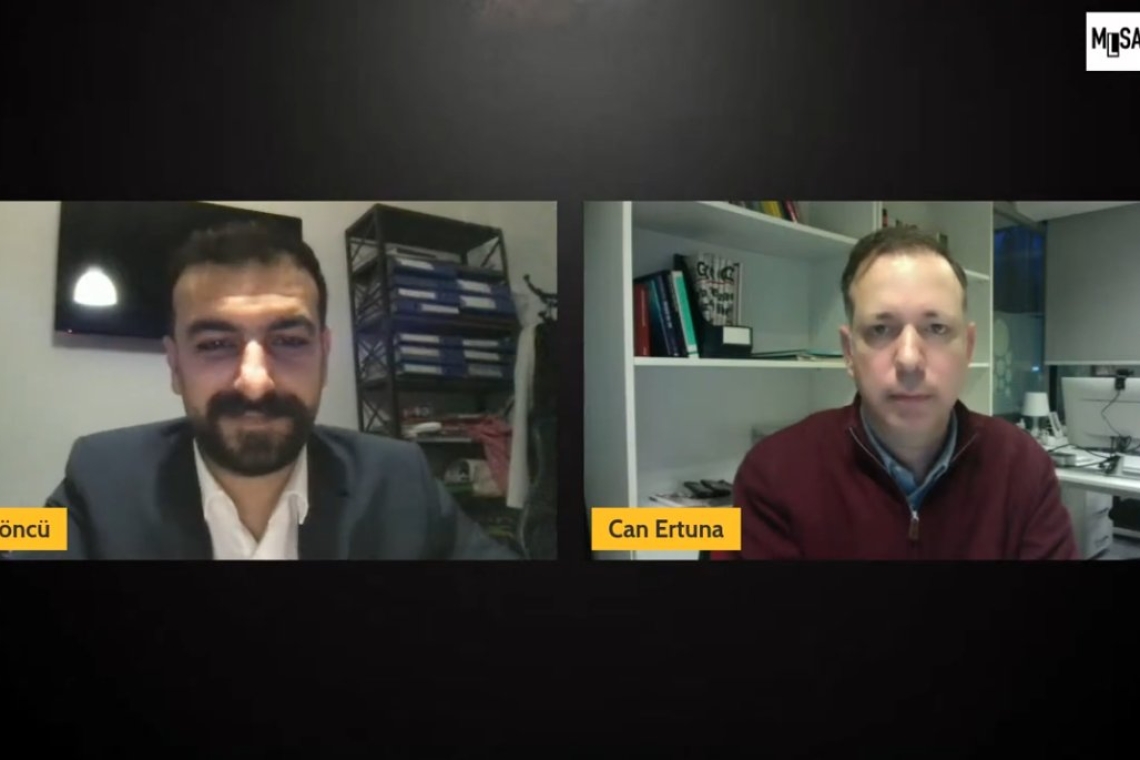
Academic journalist Dr. Can Ertuna was a guest on the program Çetele with Onur Öncü, broadcast on the MLSA YouTube channel.
Academic journalist Dr. Can Ertuna stated that journalism is in a serious crisis, saying: “Both globally and in Turkey, traditional and mainstream media are facing a major crisis.”
On the first day of the war, media outlets in Turkey being unprepared—particularly Sözcü TV having an astrologer comment on the war—drew criticism. Ertuna drew attention to the media’s lack of preparedness and explained what should be done.
Ertuna continued as follows:
“Broadcasting during a crisis is really very difficult. And in such moments a ratings chase also begins… First of all, how prepared are you for this situation as an institution? If a crisis broke out in Iran tomorrow, do you have someone on staff who speaks Persian and can directly follow news sources coming from Iran? No. All right, maybe you don’t. In the past, this really was a luxury for Turkey.
Beyond that, if you had a foreign news reporter who knows the region and whom you have sent there several times before, or a diplomacy reporter… Or if you had people at hand in the newsroom with expertise instead of an astrologer—people who could reach the Iranian ambassador or similarly obtain information from their sources in the West… In television broadcasting we call this—though it’s not a very nice expression—‘spinning the ball.’
Because preparing a news package takes time. Meanwhile you have to stay on air. You may have a reporter in the region, but there may be no possibility for a live broadcast; you need to fill time until you can connect to them. For that reason, you need to have a very strong guest list.”
You can watch the full program on the MLSA TV YouTube channel.