

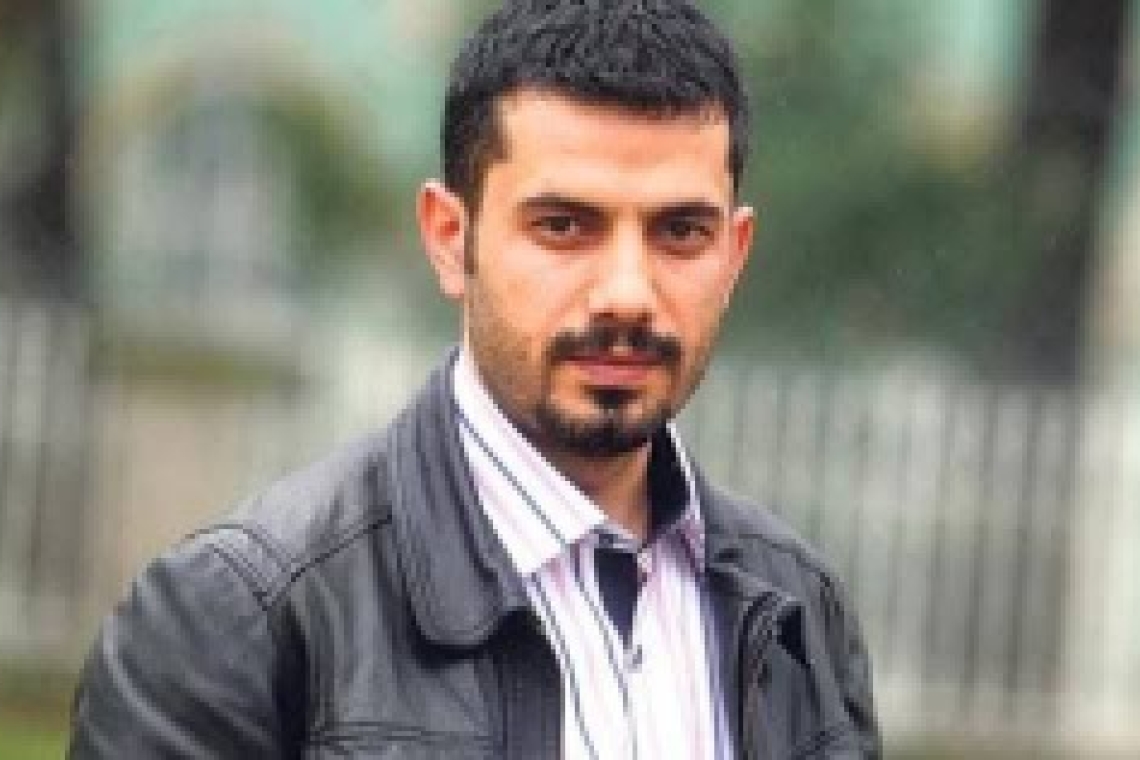
Journalist Mehmet Baransu, who is standing trial following a complaint filed by Dursun Çiçek, requested his acquittal in his defense statement, arguing that the investigation had been launched before his news report was published. “The investigation was launched before my news report was published, so the elements of the crime of slander have not been established,” Baransu said. The court adjourned the trial until Feb. 11 to allow the prosecutor to submit a final opinion.
Metin YETİM
Court adjourns Mehmet Baransu trial until Feb. 11 for prosecutor’s final opinion
Journalist Mehmet Baransu, who is standing trial on slander charges following a complaint filed by retired Staff Col. Dursun Çiçek, rejected the allegations and requested his acquittal, arguing that the investigation at the center of the case had been launched before his news report was published.
At a hearing before Istanbul’s Anadolu 2nd Criminal Court of First Instance, Baransu and lawyers for both sides presented their defense statements and arguments. While Baransu maintained that his reporting constituted legitimate journalistic activity, Çiçek and his lawyer reiterated their accusations that he had engaged in slander. The court adjourned the trial until Feb. 11 to allow the prosecutor to prepare a final opinion on the merits of the case.
Baransu says he was carrying out journalistic work
In his defense statement, Baransu denied committing slander, arguing that the legal elements of the offense had not been established.
“For the crime of slander to have occurred, an investigation would have had to be launched as a result of my news report. The investigation was initiated before my report was published. Therefore, no crime of slander was committed,” Baransu said.
“The indictment does not explain what constitutes specific or general intent. The crime of slander has not been established,” he added.
Baransu’s lawyer, Koç, also argued that the legal requirements for a slander conviction had not been met and requested his client’s acquittal.
“The crime of slander requires specific intent. What position did the complainant hold that would have given my client a motive to deliberately target him with slander? Neither the material nor the mental elements of the offense have been established. Furthermore, the complainant was acquitted. Therefore, the crime of slander has not occurred. I request my client's acquittal,” Koç told the court.
Çiçek’s lawyer reiterates allegations
İrem Çiçek, the retired colonel’s daughter and lawyer, referred to other legal proceedings against Baransu and accused him of involvement in efforts to remove military personnel from the Turkish Armed Forces (TSK).
“We learned about Baransu’s news report when he personally presented it in the newspaper. His conviction for membership in FETÖ was upheld. Ultimately, my father had to fight against a case fabricated by FETÖ prosecutors, judges and journalists. The defendant and members of this organization tried to purge the Turkish Armed Forces,” she said.
FETÖ, an acronym for the Fethullahist Terrorist Organization, is the designation used by Turkish authorities for the movement associated with the late cleric Fethullah Gülen. Turkish authorities accuse the movement of orchestrating a failed coup attempt in July 2016, an allegation Gülen denied.
Dursun Çiçek also accused Baransu of participating in what he described as a plot to frame him.
“I was put on trial over a document allegedly found in a lawyer’s office, and I was acquitted. He is a member of the organization,” Çiçek told the court.
Baransu recounts publication of disputed document
In a detailed account of the events leading to his prosecution, Baransu maintained that the disputed news reports were produced through ordinary journalistic methods, including checking information with prosecutors and police sources.
“The case in which I am being tried concerns a document that emerged during a search at an address in Ankara. We tried to investigate the document through prosecutorial and police sources,” Baransu said.
“We learned about a document related to this investigation from a court clerk who was a relative of a reporter at Sabah. We obtained the document. A reporter from Yeni Şafak saw that we had obtained it, so we had to give it to him as well.”
Baransu said the document was subsequently published in Taraf, the now-defunct Turkish newspaper where he worked, prompting nationwide debate.
“We published the document in Taraf. Turkey began debating it. Bekir Bozdağ made a statement on the day the news report was published,” he said.
Baransu then outlined a series of public statements by senior Turkish politicians following the publication of the document.
“On June 14, Tayyip Erdoğan made a statement saying, ‘We will file a lawsuit.’ On June 15, Erdoğan said, ‘If the allegations are true, it is grave.’ The following day, Cemil Çiçek said, ‘We are filing a criminal complaint.’ Nationalist Movement Party (MHP) leader Devlet Bahçeli said, ‘Civilian prosecutors should investigate.’”
He also recalled additional remarks by Erdoğan, who was Turkey’s prime minister at the time, concerning the military’s handling of the allegations.
“On June 17, Erdoğan said, ‘We will not remain silent. We have activated the legal process.’ The General Staff did not take action because the original document was unavailable. Erdoğan then said, ‘The General Staff knows what it needs to do.’ In the following days, he said, ‘If we find the original document, we will initiate legal proceedings.’”
Baransu said the controversy continued with Çiçek’s testimony and subsequent developments concerning the document’s authenticity.
“Dursun Çiçek gave a statement on June 30. Erdoğan reacted to the hearing. It was later announced that a version of the document bearing an original ink signature had been made public. On Oct. 24, I called Dursun Çiçek and asked him about the allegations,” he said.
Following the statements from both sides, the court adjourned the hearing until Feb. 11 for the public prosecutor to submit a final opinion on the merits of the case.