

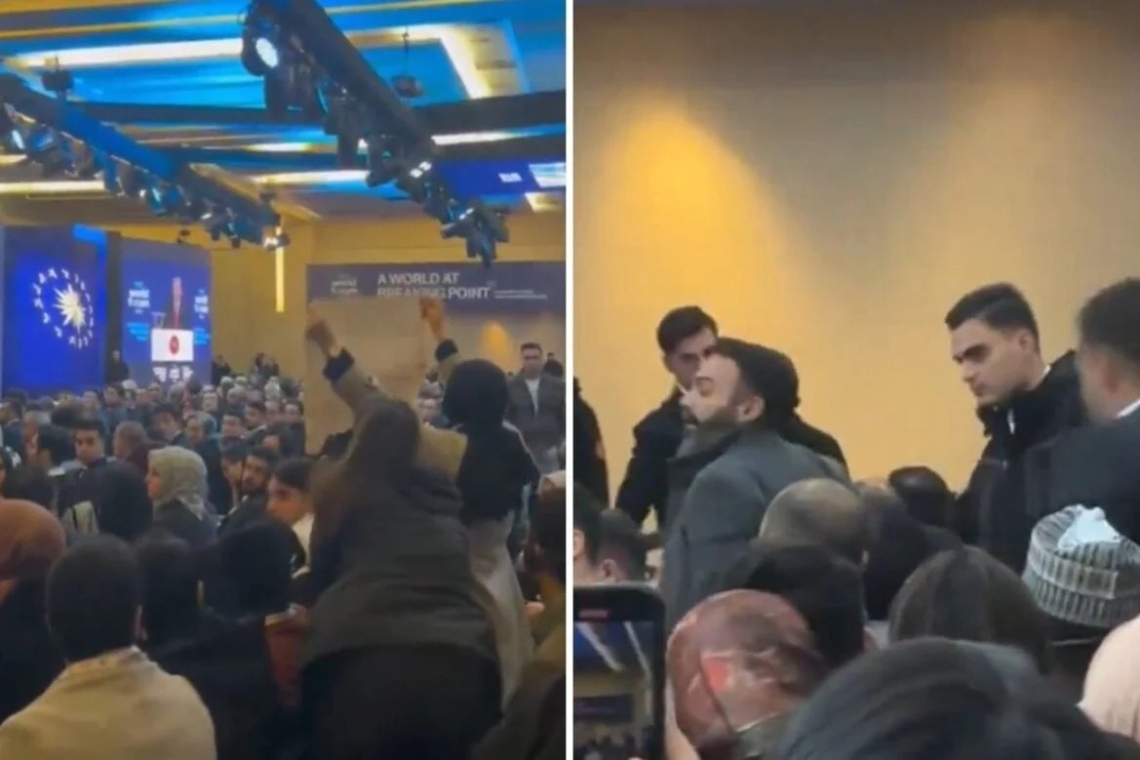
- In the trial of 9 people prosecuted for protesting Israel while President Erdoğan was speaking, the statements of police witnesses conflicted with official reports, expert witness reports, and video footage.
- The allegation that the intervention order came from the Presidential Personnel Department entered the case file. It was confirmed by a police officer witness that Istanbul Governor Gül was also present in the detention room.
- The defense, stating that the trial was prolonged despite an indictment violating the Criminal Procedure Code (CMK), and that the right to defense was limited with warnings of “getting into the merits,” demanded acquittal.
Semra Pelek
The fourth hearing of the trial of 9 activists being prosecuted on the grounds that they protested trade with Israel during a speech by President Recep Tayyip Erdoğan was held at Istanbul 8th Criminal Court of First Instance. Five defendants attended the hearing.
In the case file in which the defendants are being tried for “participating in unlawful meetings and marches” and “not dispersing despite warning,” the police officers who were in the hall on the day of the incident and who had signed the arrest reports were heard as witnesses. However, as the hearing progressed, inconsistencies between the witness statements of the police officers and the official reports, expert reports, and footage became apparent.
Testimonies of police witnesses became the subject of controversy
Defense lawyers asked the police witness about the expression in the arrest report for defendants Gülşah Eldemir and Mücahit Özel stating that “intervention was made as they were about to chant slogans.” The police witness said they understood that the defendants were preparing to chant slogans when they stood up, while the other guests remained seated. The judge, in response to this statement, asked, “Maybe they stood up to go outside, how do you know?” The police witness said they felt these people were going to chant slogans.
Defense lawyers stated that individuals were arrested without any warning being made in the hall and asked who gave the order to intervene. The police witness said they had been instructed beforehand on how to behave during the program and that they detained the people who chanted slogans in line with this instruction.
Upon the lawyers' reminder that forensic reports showed signs of battery, the police witness argued that he did not physically harm the people he detained.
Defense lawyers argued that no warning was given in the hall before the detention procedures, and therefore the elements of the crime of “not dispersing despite warning” were not present.
Another police witness who was heard said that they had been informed beforehand on how to behave during the program and that they intervened with the people chanting slogans according to this instruction. When asked the source of the intervention, the response added a new dimension to the case file: It was alleged that the order came from the Presidential Personnel Department.
Post-detention process: Detail about Governor Davut Gül
Upon questions from the defense lawyers, the police witness confirmed that the individuals who were intervened were taken to a room after being removed from the hall and that Presidential security officers and Istanbul Governor Davut Gül were in this room. The witness police officer stated that the detainees were held in this room.
Expert report and publicity of the hearing
The judge reminded that the expert report included findings that the warnings were not heard. The police witness argued that the warnings might not have been heard due to the hall being crowded.
One of the notable details of the hearing was the issue of publicity. Because the courtroom was small, the door was kept open for ventilation, and during this time, it was observed that plainclothes police officers waiting outside the courtroom were able to hear the police witness giving testimony inside.
Defense: “Within the scope of freedom of expression”
Defense lawyers stated that the defendants acted within the scope of freedom of expression, that they did not commit any crime in the hall where President Erdoğan was speaking, that they did not insult the President, and that they did not damage any property. The lawyers emphasized that the decisions of the European Court of Human Rights (ECtHR) should be taken into account and demanded acquittal.
In the defense, it was also stated that the statements of the police witnesses conflicted with the official reports, expert report, and video footage, and a request was made for the police witnesses to be reported for the crime of falsifying documents.
The defense lawyers stated that the nine people being prosecuted protested the ongoing oil trade between Turkey and Israel during a period in which Israel’s attacks on Gaza were continuing, and said, “Both the genocide and the oil flow between Turkey and Israel are officially documented.” The judge’s attempt to interrupt these statements during the defense with a warning about “getting into the merits” led to a short but significant tension about the scope of the right to defense.
Emphasis on the Criminal Procedure Code (CMK) from the defense: “Is the reason for this case being prolonged this much really the law?”
Upon the judge’s warning referencing the Criminal Procedure Code (CMK) that the defense should focus on the merits of the case, defense lawyer Hasan Ece drew attention to the violations of the CMK in the case file and said the following:
“If you are emphasizing the CMK, I would also like to remind a few points. We would like to remind the court of the CMK. Although the indictment, which was prepared in violation of the CMK, should have been returned, it was not returned and the hearings have started. Despite deficiencies in violation of the CMK, the trial is being prolonged. We are at the fourth hearing. Is the reason for this case being prolonged this much really the law?”
Prosecutor requested the file for opinion
The trial prosecutor, stating that he had no additional statement in light of the current testimonies and documents, requested the case file be sent to the prosecutor’s office for the preparation of the opinion on the merits. The court, however, decided that hearing a third police witness would not affect the merits of the case, dropped this request, and postponed the hearing to June 17, 2026.
The hearing was postponed to June 16, 2026, at 12:00 p.m.