

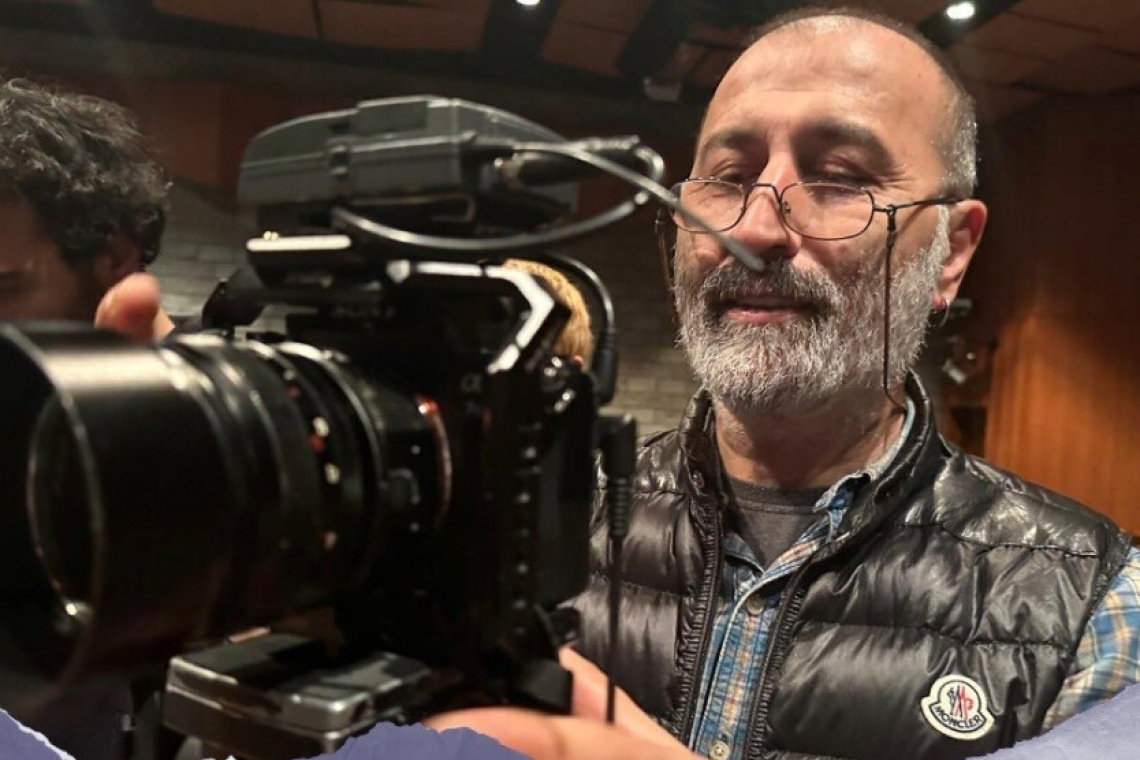
The verdict hearing in the trial of documentary filmmaker Koray Kesik, who is being tried on charges of “making propaganda for an organization,” will be held Tuesday at the Batman 2nd High Criminal Court in southeastern Turkey.
The prosecutor has asked that Kesik be convicted, citing as evidence the filming and interviews for the documentary “Bakur,” the book “Bakur Notes” found in a search of Kesik’s home, and his social media posts.
Kesik, the cinematographer of the documentary “Bakur,” is being represented by the Media and Law Studies Association (MLSA). In his opinion on the merits, the prosecutor pointed to the interviews and footage shot as part of the documentary as the basis for the charge. The prosecutor also added to the case file the book “Bakur Notes,” written by Ertuğrul Mavioğlu and seized during a search of Kesik’s home, as well as Kesik’s social media posts. The prosecution requested that Kesik be punished on the charge of “making propaganda for an organization.”
At the previous hearing, Kesik and MLSA Legal Unit lawyer Emine Özhasar delivered their defense statements.
Kesik said he has worked in documentary cinema for about 30 years and has taken part in more than 60 documentary projects. Answering questions about the filming process for “Bakur,” Kesik said: “One day, Ertuğrul Mavioğlu called me and offered me the role of cinematographer. I was excited because witnessing history excited me. That is the logic of documentary cinema.”
Kesik recalled that the filming took place in 2013, during Turkey’s peace process, a period of negotiations aimed at ending the decades-long conflict between the Turkish state and the outlawed Kurdistan Workers’ Party, or PKK. “This documentary was filmed using the observational documentary technique. We did not direct anyone, and there was no voice-over,” he said.
Responding to questions about his social media posts, Kesik said he had filmed at Newroz and May Day events. “Because of my work, I filmed crowds. I did not specifically film a flag or banner,” he said.
In her defense statement, Özhasar said “Bakur” was a documentary that recorded a social issue. “My client wanted to bear witness to history. There was a peace process in 2013. Trying documentary filmmakers 13 years later over images recorded at the time is incompatible with legal certainty,” she said.
Özhasar also said Kesik’s HTS records, which show phone traffic data, and the books found in his home could not be considered criminal evidence, and requested his acquittal.
At the previous hearing, the court lifted Kesik’s judicial control measures and international travel ban. The verdict hearing will be held Tuesday.