

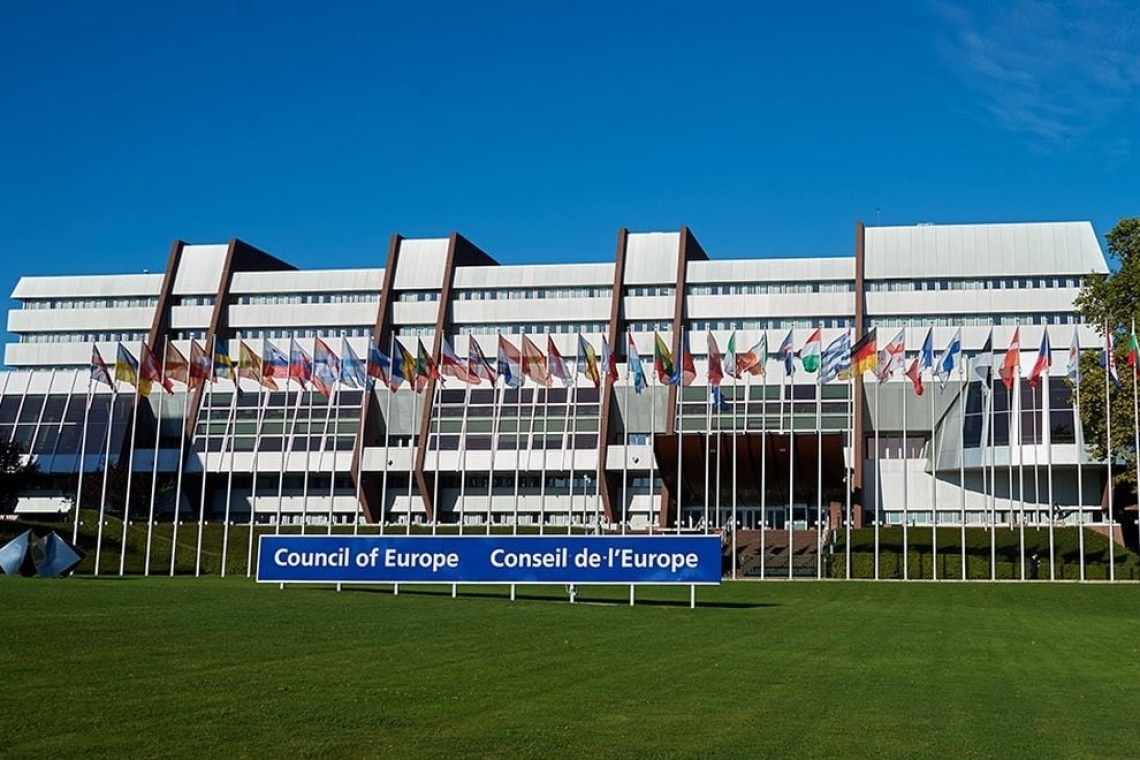
The Media and Law Studies Association (MLSA) notified the Council of Europe’s Committee of Ministers about journalist detentions and violations of freedom of expression in Turkey. The notification submitted in April 2026 reveals that Turkey continues not to implement decisions in the case groups and that systematic violations persist.
MLSA submitted a notification to the Committee of Ministers of the Council of Europe regarding five case groups in which the European Court of Human Rights ruled against Turkey, within the scope of the mechanism that allows the Committee to receive information under Rule 9.2 of its rules of procedure.
The notification, covering the Öner and Türk, Nedim Şener, Altuğ Taner Akçam, Artun and Güvener, and Işıkırık case groups, documents that Turkey continues not to fully and effectively implement the judgments in these cases.
The notification, based on MLSA’s 2025 Justice Monitoring Report, includes findings from 275 freedom of expression and journalism trials monitored in the 2024–2025 judicial year. According to the report, a total of 1,696 people, including 306 journalists, were tried in the monitored cases. As of November 2025, when the report was published, 29 journalists were in prison; as of April 2026, this number was recorded as 26.
A 560 percent increase in the number of jailed journalists on trial
One of the most striking findings of the notification is the sharp increase in the number of journalists tried in detention. While 66 people were tried in detention during the 2024–2025 judicial year monitoring period, this figure was only 10 the previous year. According to MLSA, this corresponds to a 560 percent increase.
According to the notification, journalists from different media outlets were detained each month on different accusations. In the last months of the year, Pîrha reporter Cihan Berk, followed by Ajansa Welat reporter Nedim Oruç, and in February 2026, with an operation targeting Etkin News Agency, journalists Pınar Gayıp, Elif Bayburt and Nadiye Gürbüz were detained and then arrested. At the end of February, Deutsche Welle reporter Alican Uludağ was arrested, and in March, Birgün reporter İsmail Arı was arrested.
We reject the defense that “the problem is not the wording of the provisions but their implementation”
MLSA rejects the argument put forward by the Turkish government in its action plans submitted to the Committee of Ministers that “legal regulations have been made and the problem stems from implementation.” The notification includes the following assessment: “The authorities claim in the Action Plan that the problems arise from the implementation of the provisions in question. However, the main source of the ongoing problems is the provisions themselves.”
This assessment applies to all legal provisions frequently used against journalistic activities, particularly Article 7/2 of the Anti-Terror Law and Articles 301, 220, and 299 of the Turkish Penal Code.
Judicial control measures have turned into a tool of punishment
The notification documents that judicial control measures imposed on journalists have also turned into a serious tool of pressure on freedom of expression. It is stated that journalist İsmail Saymaz was subjected to house arrest, followed by a travel ban abroad and a signature requirement; and that Rahime Karvar, after being detained for about five months, was subjected to various judicial control measures for three months. Based on these examples, MLSA makes the following assessment: “The judicial control measures applied have been heavier than the final sentence given during the trial process.”
Copyright fees classified as “organization financing”
One notable section of the notification addresses a case in which the copyright fees journalists received for their news reports were classified as “organization financing.” Within the scope of an investigation launched by the Eskişehir Chief Public Prosecutor’s Office in November 2024, journalists detained in simultaneous raids are being tried on charges of “aiding an armed terrorist organization” on the grounds of the royalties they received. According to MLSA, this approach reflects a new legal pattern that directly places journalistic activity within the scope of crime.
Four concrete steps requested from the Committee of Ministers
Through its notification, MLSA requests the Committee of Ministers to take four concrete steps: to request that Turkey revise its action plans in line with European Court of Human Rights judgments; to insist on the submission of detailed statistics on the implementation of laws; to deliver a strong political message to Turkish judges and prosecutors to act in accordance with freedom of expression; and for the Chair of the Committee to send a letter to Turkey’s Minister of Justice, taking into account the failure in the implementation of the judgments.
MLSA also requests that, if these steps are not taken, the Secretariat be instructed to prepare a draft interim resolution regarding the case groups in question.