
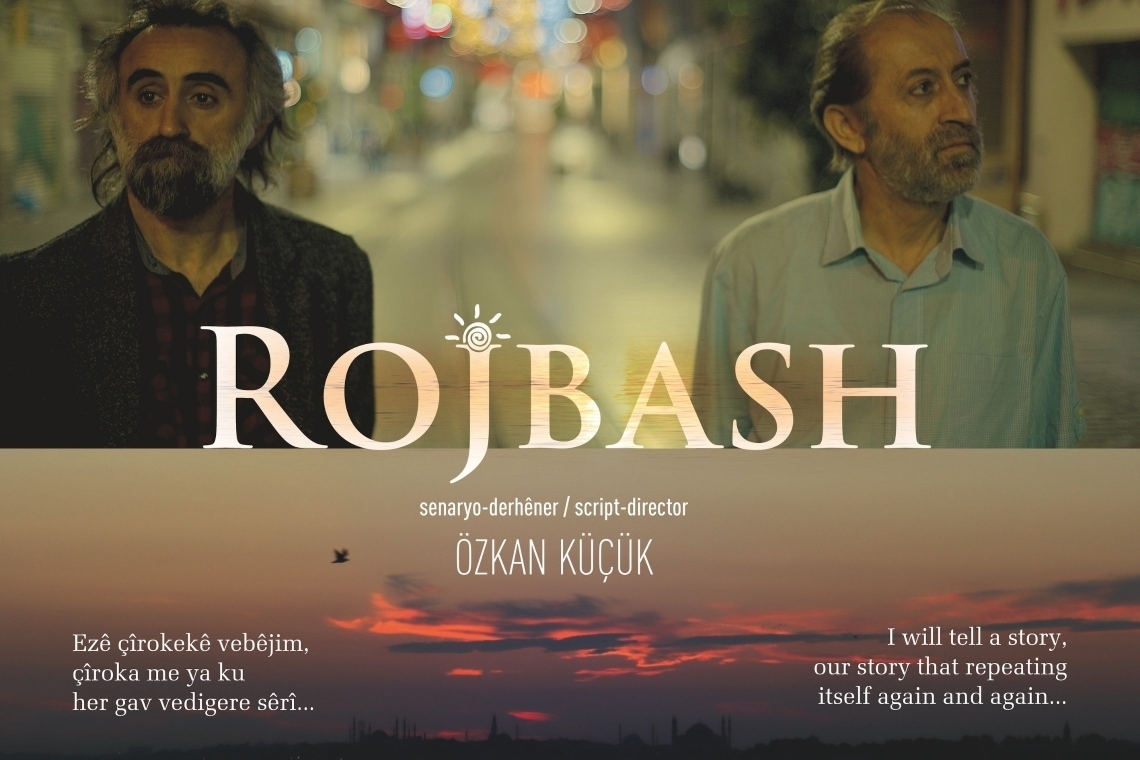
- The Media and Law Studies Association (MLSA) has filed an individual application with Turkey’s Constitutional Court over the blocking of screenings of “Rojbash,” a film by director Özkan Küçük that explores the repression of Kurdish-language theater.
- In its application, MLSA’s legal team argued that the ban violated freedom of expression and artistic freedom, as well as the right to property, the right to respect for private life, the right to a fair trial and the prohibition of discrimination. The association asked the court to find that these rights had been violated.
- Director Küçük criticized the prolonged legal process and said he expected the Constitutional Court to rule on the application promptly. He added that allowing the film to be screened again would also contribute to Turkey’s democratization process.
The Media and Law Studies Association (MLSA) has filed an individual application with Turkey’s Constitutional Court over a decision blocking the theatrical release of director Özkan Küçük’s film “Rojbash” in Turkey and the subsequent dismissal of a lawsuit challenging the decision. The application argues that the Ministry of Culture and Tourism’s decision violated fundamental rights.
Küçük has worked in the film industry as a director, assistant director and cinematographer since 1995. He began shooting “Rojbash,” his first feature-length film, in 2020 and completed filming in the summer of 2021. Post-production and editing were completed in 2023.
The 90-minute comedy-drama tells the story of actors from the Yeni Yaşam Theater company who faced obstacles while attempting to stage a Kurdish-language play titled “Rojbash” in Istanbul in the 1990s. The film follows the actors as they reunite years later to revive the production, weaving together dreams and reality.
Featuring dialogue in both Turkish and Kurdish, the film has been screened at seven festivals in Germany, Austria, Italy, Russia and Iraq since 2023. However, a decision by Turkey’s Ministry of Culture and Tourism has prevented its commercial theatrical release in Turkey.
Ministry deems film unsuitable for theatrical release
Küçük applied to Turkey’s Ministry of Culture and Tourism on May 17, 2024, seeking the classification and evaluation required for the film to be screened and distributed in the country.
In a decision dated July 30, 2024, the Cinema Film Evaluation and Classification Subcommittee alleged that the film contained “provocations contrary to public order” and “portrayed sympathizers of a terrorist organization as victims,” referring the matter to the higher board for review.
On Aug. 7, 2024, the higher board ruled that the film was unsuitable for commercial distribution and screening, citing public order, the protection of children’s and young people’s mental health, and other principles enshrined in the Constitution. Küçük was notified of the decision on Aug. 14, 2024.
On Oct. 7, 2024, Küçük filed a lawsuit with Ankara’s 3rd Administrative Court, seeking to overturn the decision, suspend its enforcement and obtain compensation for damages.
In its defense statement submitted to the court, the ministry alleged that the film contained scenes, dialogue and images that violated Article 3 of the Turkish Constitution, which establishes the indivisible integrity of the state.
The ministry also claimed that the film contained discriminatory elements, portrayed village guards — members of a state-backed paramilitary system established to fight Kurdish militants — in a derogatory light, created the impression that Turkey’s fight against the Kurdistan Workers’ Party (PKK) was unjustified, and included assertions that could deepen divisions within society.
Expert report points to less restrictive measures instead of outright ban
Ankara’s 3rd Administrative Court ordered a court-appointed expert review of the case on April 24, 2025. In a report dated Nov. 6, 2025, the expert found that the film did not contain violence or extreme fear-inducing content of sufficient intensity to cause lasting harm to the mental health of children and young people, assessing the risk as low.
The report stated that concerns over certain scenes and dialogue deemed objectionable could be addressed through less restrictive measures, such as imposing an age restriction of 18 and older or removing specific scenes, rather than banning the film entirely. The expert also emphasized the need to strike a balance between artistic freedom of expression and social responsibility.
On Jan. 20, 2026, Ankara’s 3rd Administrative Court annulled the board’s decision declaring the film unsuitable for commercial distribution and screening. Taking the expert report into account, the court ruled that the screening ban was unlawful. However, it rejected Küçük’s claims for pecuniary and nonpecuniary damages.
Küçük appealed the rejection of his compensation claims on Feb. 18, 2026. The Ministry of Culture and Tourism also filed an appeal on March 4, 2026, seeking to overturn the annulment ruling and have the lawsuit dismissed.
On April 7, 2026, the 10th Administrative Litigation Chamber of the Ankara Regional Administrative Court rejected Küçük’s appeal. Accepting the ministry’s appeal, the chamber overturned the lower court’s ruling and dismissed the lawsuit.
On Sept. 10, 2026, the 10th Chamber of Turkey’s Court of Cassation rejected Küçük’s final appeal and upheld the regional administrative court’s ruling, making the decision final.
MLSA: Freedom of expression and artistic freedom violated
In its application to Turkey’s Constitutional Court, MLSA’s legal team argued that the decision to block the film’s release violated freedom of expression under Article 26 of the Turkish Constitution, freedom of science and the arts under Article 27, and freedom of the press under Article 28. The application also cited the protections for freedom of expression under Article 10 of the European Convention on Human Rights (ECHR).
MLSA reiterated that the court-appointed expert report had identified less restrictive measures that could be considered instead of banning the film outright.
The application stated that the ban had prevented Küçük from reaping the benefits of four years of work, depriving him of commercial revenue and opportunities to participate in film festivals. It argued that the delay in the film’s release had diminished its relevance and ability to reach audiences, while also making it harder for Küçük to secure funding for new projects and establish professional collaborations.
Violations of the right to respect for private life and the right to property
The application argued that blocking the film’s release had negatively affected Küçük’s professional life and livelihood. It stated that Küçük, who earns his living from his work as a director and producer, had suffered harm to his family life and professional development because he was unable to generate income from “Rojbash.”
The application also emphasized that linking the film to “terrorism” had damaged Küçük’s personal and professional reputation, making it more difficult for him to secure funding for new projects and establish professional collaborations. Noting that Küçük was not the subject of any criminal investigation, MLSA argued that characterizing the film in this way violated his right to protection against unjust stigmatization.
On these grounds, MLSA argued that the decision violated the right to respect for private and family life, protected under Article 20 of the Turkish Constitution and Article 8 of the European Convention on Human Rights (ECHR).
The application further argued that the ban violated Küçük’s right to property by preventing the film from being screened and officially registered. It stated that Küçük, who produced the film and holds its copyright, had been unable to earn revenue from it and had lost potential opportunities for professional collaboration.
MLSA also argued that the decision declaring the film unsuitable for commercial distribution had prevented its registration, thereby denying Küçük access to legal protections for his intellectual property rights.
Film reviewed without a Kurdish interpreter
In its application, MLSA also argued that the film had been banned because of its use of the Kurdish language. The association said the Ministry of Culture and Tourism had failed to provide concrete examples of the content it deemed objectionable and noted that no interpreter had been present during the review, despite half of the film being in Kurdish.
MLSA argued that reviewing the film without an interpreter had prevented a proper assessment of its content and that the decision amounted to language-based discrimination. It maintained that this violated the principle of equality under Article 10 of the Turkish Constitution and the prohibition of discrimination under Article 14 of the European Convention on Human Rights (ECHR).
In its application, MLSA’s legal team requested legal aid and interim measures. It also sought to have the film cleared for screening and the administrative decision overturned. The association further requested that the Court of Cassation’s Sept. 10, 2026, ruling be set aside and that a retrial be ordered to allow Küçük’s lawsuit to be upheld.
MLSA asked the Constitutional Court to find violations of freedom of expression, freedom of science and the arts, freedom of the press, the right to respect for private life, the right to property, the right to a fair trial, the right to an effective remedy and the prohibition of discrimination.
Özcan Küçük: “This film deserves to be released without restrictions”
Küçük criticized the reinstatement of the screening ban and the prolonged legal proceedings. He questioned why the ban had been reinstated after a court overturned it and expressed frustration that a Kurdish-language film had been caught up in legal proceedings for years.
“While the 3rd Administrative Court issued an appropriate and widely anticipated ruling, the Culture Ministry’s lawyers appealed it, and the appeals court reinstated the ban at lightning speed. This raises serious concerns, both from a legal standpoint and in terms of our constitutionally protected rights.
“At a time when Turkey is going through a process described as integration, or what we might call social rapprochement, I find it deeply troubling that a Kurdish-language film is still being passed from one courtroom to another, with its legal journey growing longer and longer, from the appeals court to a final appeal and then to the Constitutional Court. I feel that integration needs to take place within the judicial system as well.
“Unfortunately, all I can do is call on the judicial system and the Constitutional Court to make prompt decisions concerning our constitutional rights. There are cases in which proceedings before the Constitutional Court have taken years. Right now, our only expectation is that the Constitutional Court resolves this matter quickly.”
Emphasizing that a swift ruling by the Constitutional Court would be important both for allowing the film to return to theaters and for protecting freedom of expression, Küçük continued:
“If the Constitutional Court acts quickly, it could pave the way for the film to be released from these restrictions, particularly in light of the freedoms of expression, artistic expression, thought and dissemination of ideas, all of which are protected under various articles of the Constitution, as outlined in our application. Allowing this film to return freely to theaters would also contribute to the ongoing democratization process.
“From the beginning, both our lawyers and I believed in and trusted the legal process, and we wanted it to proceed properly. But it is a major problem when one court lifts the restrictions on a film, only for the ban to be reinstated immediately afterward, prolonging the process even further.
“Winning this case would also mean, in a sense, safeguarding freedom of criticism. That is important for building a society that embraces diverse perspectives. A filmmaker may have something different to say, hold a different opinion and express that opinion. This falls within the bounds of legitimate criticism. People are free to criticize the film however they wish. Those who want to watch it can do so, and those who do not can simply choose not to.”
Objecting to the Ministry of Culture and Tourism’s interference in film screenings, Küçük said the ministry should not have the authority to decide whether audiences can watch a film.
“The Culture Ministry cannot decide whether a film should be watched. I feel compelled to say that again. The Culture Ministry has some discretion to decide not to fund a film I make, even though that funding comes from our tax money. But it should not assume it has the right to interfere with a film’s commercial distribution, noncommercial circulation or private screenings.
“That is not the Culture Ministry’s job. We would be very happy if everyone went back to doing their own jobs. That would contribute to democratization. Integration must take place in every aspect of society. That is something I want to emphasize.”