
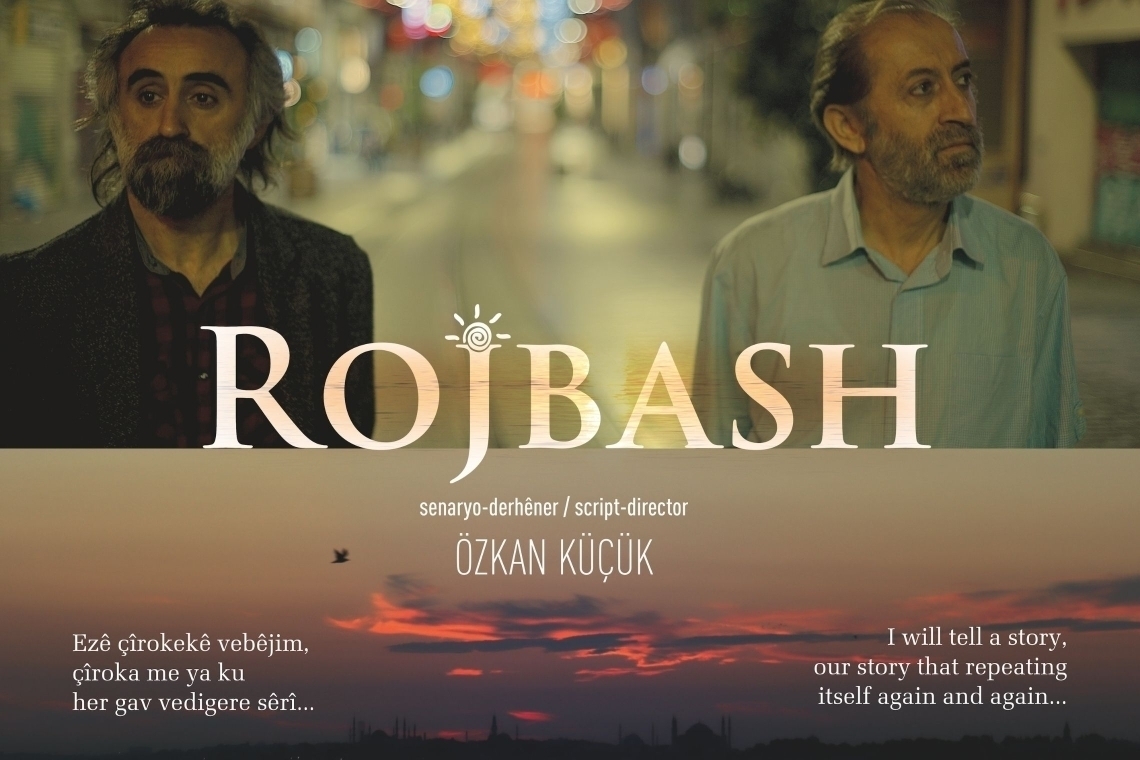
- MLSA lawyers filed an appeal with the Court of Cassation against the Ankara Regional Administrative Court ruling that reinstated the ban on the film Rojbash.
- In the application, the lawyers said the ruling constituted a disproportionate interference with freedom of expression and artistic freedom, and requested a stay of execution and a hearing review.
MLSA — MLSA lawyers applied to the Court of Cassation against the appellate ruling that reinstated the screening ban imposed on director Özkan Küçük’s Kurdish-language film Rojbash. Lawyers from the MLSA Legal Unit submitted a petition requesting the annulment of the ruling by the 10th Administrative Litigation Chamber of the Ankara Regional Administrative Court, a stay of execution, and that the appeal review be conducted with a hearing.
On April 7, 2026, the 10th Administrative Litigation Chamber of the Ankara Regional Administrative Court overturned the ruling of Ankara’s 3rd Administrative Court that had lifted the ban on Rojbash. The chamber accepted the appeal filed by the Ministry of Culture and Tourism, rejected the case, and also denied Özkan Küçük’s claims for pecuniary and non-pecuniary damages.
In the petition submitted to the Court of Cassation, MLSA lawyers argued that the appellate ruling was unlawful and requested that it be overturned.
“A de facto ban”
The petition emphasized that the decision declaring Rojbash “unsuitable for commercial circulation and screening” amounted in practice to a de facto ban. It stated that the film could not be commercially distributed or publicly screened in Turkey, completely preventing the producer from bringing the work together with audiences.
MLSA lawyers said that although public authorities may have powers in the field of artistic expression, using that authority in the form of a ban — the most severe form of interference — violated the principle of proportionality. The application argued that banning the film outright without considering lighter measures such as classification, age restrictions, warning notices, or a rating system was unlawful.
“Social sensitivity cannot be turned into censorship authority”
The petition stated that the appellate court reached its conclusion based on certain lines of dialogue instead of evaluating the film as a whole and within its context. It stressed that dialogue in a cinematic work gains meaning through characters, scenes, dramatic structure, and narrative technique.
MLSA lawyers argued that the justification of “social sensitivity” could not serve as grounds for categorically banning artistic works in democratic societies. The application stated that sensitivities could instead be managed through methods such as classification and warnings, and that any contrary approach would effectively transform the concept of “sensitivity” into censorship authority.
Emphasis on “prior censorship”
The application emphasized that banning the film before it had even met its audience constituted “prior censorship.” Referring to precedents of the European Court of Human Rights and Turkey’s Constitutional Court, MLSA lawyers said preventive interventions against artistic freedom of expression should be subject to the strictest scrutiny.
The petition also recalled previous violation rulings by the Constitutional Court regarding bans imposed on films through decisions declaring them “unsuitable for commercial screening.”
“The same obstruction 30 years later”
MLSA’s application also drew attention to the context of the film Rojbash. It stated that the film tells the story of a group that staged a Kurdish-language theater play about 25 years ago and the obstacles they encounter years later while trying to stage the same play again.
The petition recalled that bans imposed on Kurdish-language theater productions during the 1990s constituted a systematic human rights problem. It stated that the Rojbash theater play was blocked by police intervention in the southern Turkish city of Mersin in 1997, that the Mesopotamia Cultural Center was sealed off, and that 11 people, including actors, were detained.
MLSA lawyers said that despite nearly 30 years having passed, the film now faced a similar obstruction through administrative and judicial rulings.
Request for stay of execution and hearing
MLSA lawyers also requested that the Court of Cassation suspend the execution of the ruling by the 10th Administrative Litigation Chamber of the Ankara Regional Administrative Court. The petition stressed that implementation of the ban would cause damages to the plaintiff that would be difficult, or even impossible, to remedy.
The application stated that preventing the work from entering commercial circulation and public screening constituted a severe and difficult-to-reverse interference with artistic freedom of expression. MLSA also requested that the appeal review be conducted with a hearing.
What happened?
In 2024, the Ministry of Culture and Tourism ruled that the Kurdish-language film Rojbash, directed by Özkan Küçük, was “unsuitable for commercial circulation and screening.” The decision effectively prevented the film from being shown in Turkey.
In the lawsuit filed with legal support from MLSA, Ankara’s 3rd Administrative Court annulled the ban, finding it unlawful. The court stated that lighter measures, such as classification, were possible instead of a ban.
The Ministry of Culture and Tourism appealed the ruling. The 10th Administrative Litigation Chamber of the Ankara Regional Administrative Court accepted the ministry’s appeal, overturned the lower court ruling, and rejected the case.
MLSA lawyers then filed an appeal with the Court of Cassation against that ruling.