

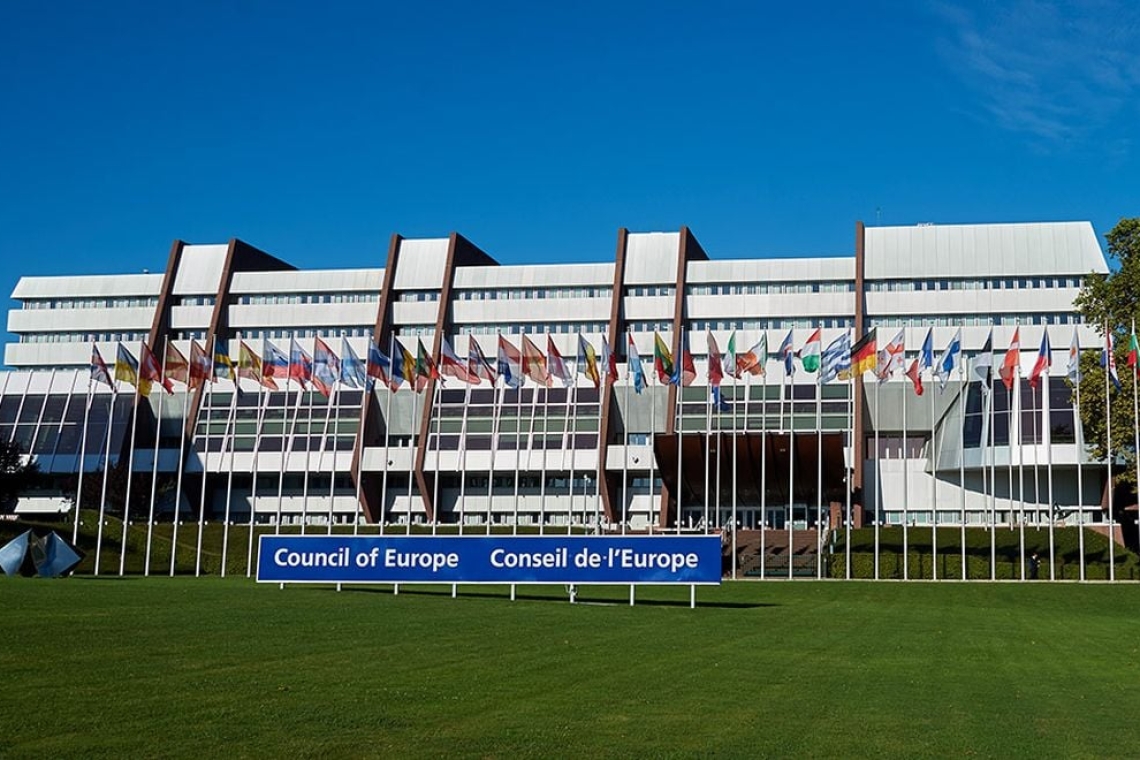
A Rule 9.2 submission filed by the Media and Law Studies Association (MLSA) to the Council of Europe’s Committee of Ministers has been published on the Council of Europe’s website, providing civil society input on how Turkey is implementing European Court of Human Rights (ECHR) rulings on freedom of expression.
Within the Council of Europe system, non-governmental organizations can submit observations and information to the Committee of Ministers under Rule 9.2 of its rules of procedure regarding the execution of ECHR judgments. These submissions are made public as part of the Committee’s supervision process. MLSA’s submission on Turkey’s implementation of ECHR rulings related to freedom of expression was published within this framework.
Following the publication, the Committee of Ministers adopted notes and decisions on several freedom of expression case groups during its 1553rd CM-DH meeting held on March 9–11, 2026.
The cases examined included long-standing groups under supervision concerning Turkey, such as Öner and Türk, Nedim Şener, Altuğ Taner Akçam, and Artun and Güvener. These cases involve violation rulings related to criminal investigations, detentions and convictions targeting journalists and individuals exercising freedom of expression.
The data in MLSA’s submission is based on the association’s 2025 Justice Monitoring Report. According to the report, a total of 1,696 people were tried in 275 freedom of expression cases monitored during the 2024–2025 judicial year, including 306 journalists. At the time of the report’s publication, 29 journalists were in prison. According to MLSA’s updated figures, at least 26 journalists were detained as of January 2026.
Observers from MLSA identified numerous violations of the right to a fair trial in the hearings they monitored. The report highlighted practices such as hearings not starting on time, defense statements being interrupted, restrictions on defendants’ right to speak, and a heavy police presence in courtrooms.
The submission also stated that counterterrorism legislation is widely applied against individuals exercising freedom of expression. In the cases monitored by MLSA, the most frequent charges were membership in a terrorist organization and terrorist propaganda. According to the association, in many cases news reports, interviews or public statements were made the subject of criminal investigations.
As an example, the submission cited the conviction of journalist Nevşin Mengü on charges of “terrorist propaganda” over an interview she conducted with Salih Muslim, a member of the presidential council of the PYD, regarding developments in Syria. In another case, seven journalists who attended a press statement for journalists killed in Syria were detained on the same charge and acquitted about 40 days later.
MLSA reported a notable increase in the use of pretrial detention for journalists. During the 2025 monitoring period, 66 people were tried in detention, compared with 10 the previous year, marking an increase of approximately 560%.
Journalists were most commonly prosecuted on charges such as membership in a terrorist organization, terrorist propaganda, targeting individuals involved in counterterrorism efforts, spreading misleading information to the public, and violating the law on meetings and demonstrations. MLSA also emphasized that judicial control measures such as house arrest, travel bans and mandatory check-ins have become increasingly widespread and have turned into a de facto punitive tool.
The submission further noted that Article 301 of the Turkish Penal Code and insult-related offenses are frequently used in freedom of expression cases. For example, journalist Tuğçe Yılmaz was on trial for “insulting the Turkish nation” over a news report about the life experiences of Armenian youth. According to MLSA’s data, during the monitoring period four people were convicted of insulting the president and two of insulting a public official.
According to MLSA, the violations identified in these case groups are not isolated incidents but point to structural problems. The association therefore called on the Council of Europe to continue closely monitoring Turkey’s implementation of ECHR rulings on freedom of expression and to urge authorities to take concrete steps toward necessary reforms.