
Rabia Çetin
The first hearing in a lawsuit challenging the ban on the Kurdish-language film Rojbash is set to take place on Jan. 16 at the 3rd Administrative Court in Ankara. The film had been barred from theatrical release and commercial circulation in Turkey after the Ministry of Culture and Tourism ruled it “not suitable for commercial circulation or screening.”
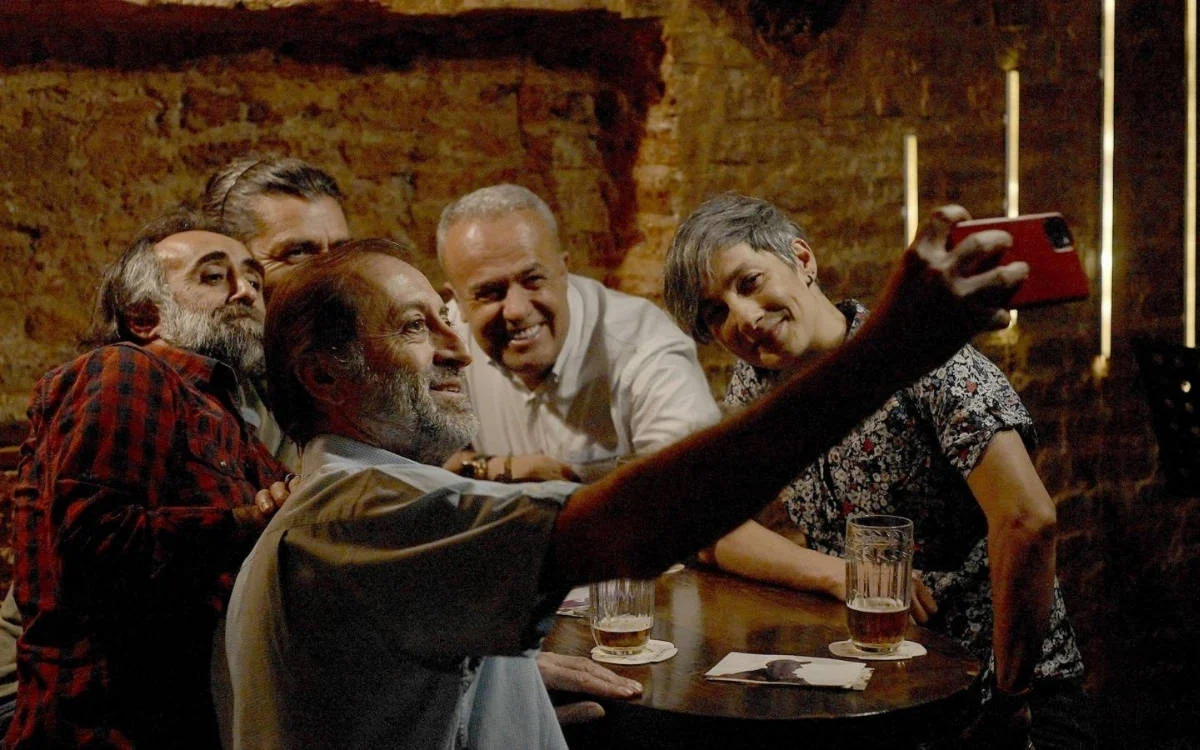
Produced and directed by Özkan Küçük, Rojbash tells the story of a group of Kurdish theater actors reuniting after 25 years. The film’s legal defense is being handled by the Media and Law Studies Association (MLSA), which filed suit to annul the Culture Ministry’s classification decision.
Speaking to MLSA ahead of the hearing, Küçük said he remained optimistic: “Even if it’s quiet and under the radar, we will win this case. And if we do, it won’t just be a victory for Rojbash, but for future films as well. We are pursuing this case for a free cinema.”
The ministry's Subcommittee on the Evaluation and Classification of Motion Pictures justified the ban on the grounds of “public order, protection of the mental health of minors and youth, and principles enshrined in the Constitution.” The film was thus denied the classification certificate required for public screenings and commercial release.
MLSA initially requested a stay of execution from the court, which was denied. An appeal to the Ankara Regional Administrative Court also failed, and on Jan. 6, 2025, the court upheld the ban. With domestic legal avenues exhausted, MLSA filed an individual application to the Constitutional Court on Jan. 29, 2025.
Director Küçük said he never anticipated such a decision when making the film: “I wasn’t worried about a ban simply because the film is in Kurdish. We didn’t apply self-censorship; we followed a clear artistic and ethical line. I expected the Evaluation Board to reflect that.”
Küçük argued that labeling the film “unsuitable for commercial circulation” amounts to a de facto ban: “They claim it’s just a classification, but in practice, it’s a prohibition. Without a classification certificate, the film can’t be screened in cinemas, and even festivals become problematic.”
He criticized the system for being distorted from its original aim: “Classification is supposed to protect children and young people. If that purpose were genuinely served, I wouldn’t object. But using it as a tool of censorship is alarming.”
No specific scenes cited in ministry's initial decision
Küçük noted that the Evaluation Board’s decision failed to cite any specific scenes as problematic: “The decision only listed general clauses. There was no clarity—nothing like ‘this scene violates this rule.’ It was a sweeping rejection. The word ‘ban’ isn’t even used; it just says the film was deemed unfit for commercial circulation.”
He had expected, at most, requests for scene edits rather than a full prohibition: “Honestly, I thought we might get suggestions for censorship. I didn’t expect an outright ban.”
Expert report: Ban violates artistic freedom
The court previously assigned an expert panel to evaluate the case. The expert report concluded that banning the film was legally unfounded and emphasized the importance of artistic freedom. The report warned that restrictive approaches to art could limit intellectual diversity and a critical public culture.
Küçük called the report “detailed and important,” noting that it explicitly stated the film posed no harm to children or young people: “The expert found the total ban unjustifiable and based the argument on the right to artistic expression. That’s significant.”
However, the report also suggested that some scenes could potentially be removed—a recommendation Küçük firmly opposed, calling it “an open suggestion for censorship.”
Culture Ministry claims film promotes propaganda, threatens public order
In its legal defense, the Culture Ministry argued the ban was lawful. Ministry attorneys claimed the film contained provocative material that undermines public order and portrayed sympathizers of terrorist organizations as victims.
The ministry further alleged the film included scenes, dialogues, and imagery that violated the constitutional principle of Turkey’s indivisible unity. It also accused the film of promoting discriminatory content based on language, political views, and ethnicity, and claimed it advocated for a language other than Turkish as a potential official language—charges seen as highly sensitive in Turkey's political context.
The ministry said the film portrayed public servants (specifically, village guards) in a derogatory manner and created a narrative that delegitimized Turkey’s fight against the Kurdistan Workers’ Party (PKK), which is designated as a terrorist group by Turkey, the United States and the European Union. The Board unanimously found the film in violation of Law No. 5224 and ruled it unsuitable for release.
Responding to the ministry’s claims, Küçük said: “They accuse us of discrimination for using Kurdish. That’s bizarre. No one accuses you of discrimination for making a film in French or English. But because we made a film in an oppressed and ignored language, we’re accused of this.”
He also noted that one scene was misinterpreted: “The film reenacts an old theater play. In one scene, a village guard character appears simply as part of the audience, yet it’s being treated as if it insults state officials.”
Screened abroad but rejected by Turkish festivals
Rojbash premiered in 2023 at the Duhok International Film Festival in the Kurdistan Region of Iraq and later had its European premiere at the Düsseldorf Kurdish Film Festival. The film has been screened in seven countries so far.
Despite international showings, Rojbash has not been accepted into any film festivals in Turkey. “We applied to many festivals, but were either disqualified or rejected without being viewed,” said Küçük.
The film has had only three limited screenings in Turkey—in the southeastern cities of Diyarbakır and Batman, and in Istanbul. Küçük described a strong emotional response from viewers: “Audiences laughed, got emotional, wanted to talk. There was a deep connection. I wish more people could see it.”
Actor previously involved in case at European court
One of the film’s actors, Kemal Ulusoy—who plays the character Kemal—was previously involved in a European Court of Human Rights (ECHR) case against Turkey. In 1999, the Ankara Governor’s Office banned a performance of a Kurdish-language play by his theater group Teatra Jiyana Nû (New Life Theater).
The ECHR later ruled that Turkey had violated freedom of expression by banning the play solely because it was in Kurdish, ordering the state to pay compensation.
Director laments lack of solidarity from artistic community
Küçük expressed disappointment at the limited public support for the film and legal battle: “We received very little solidarity from the cinema community and the public. That was both surprising and saddening. This ban is not just about Rojbash. It could happen to any film.”
He praised MLSA’s involvement as a vital act of solidarity but said support from other filmmakers and organizations was lacking: “The censorship of our film today could affect someone else’s tomorrow. These bans don’t just block films; they prevent people from coming together and creating. That’s a serious interference. But there’s little public concern. This case isn’t just about us—if we win, it will be a gain for films yet to be made.”
Still, Küçük remains hopeful: “Even if it’s quiet, we believe we’ll win. Not only Rojbash, but future films will gain freedom too. We’re fighting for a free cinema.”