
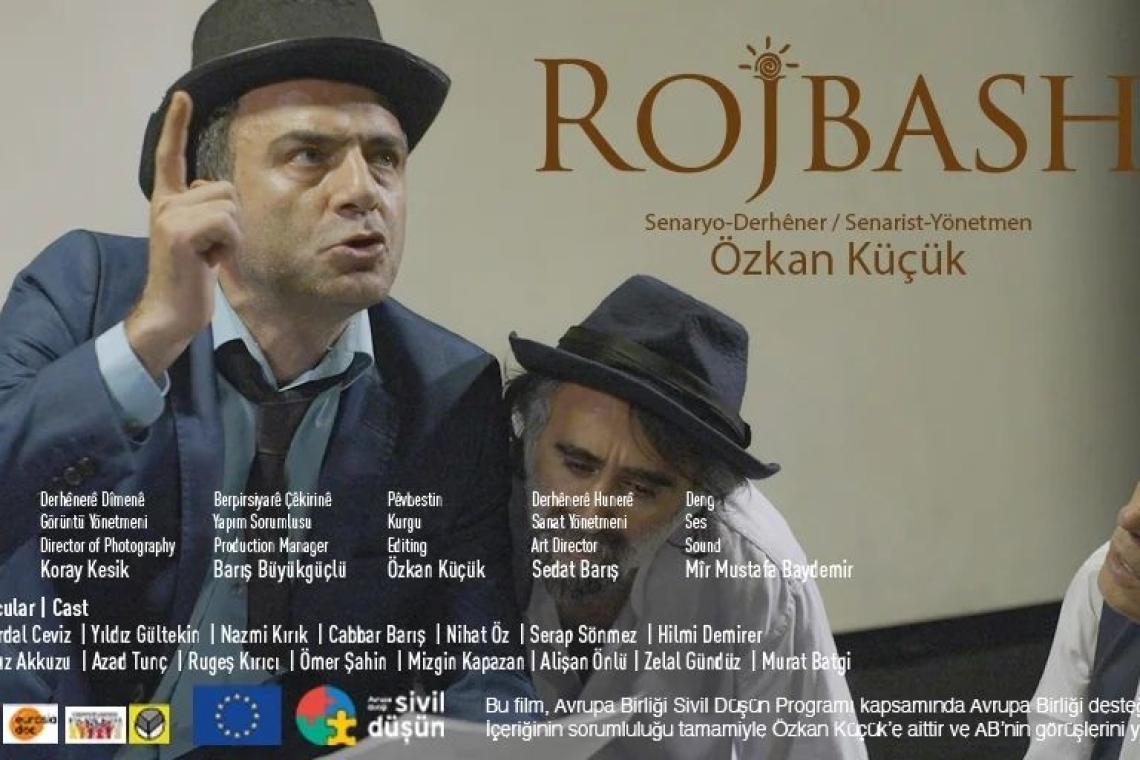
In the lawsuit filed regarding the Kurdish film Rojbash, which was de facto banned by the Ministry of Culture and Tourism with the decision "not suitable for commercial circulation and screening," the Ankara 3rd Administrative Court ruled that the ban was unlawful. The decision issued as a result of the case conducted with the legal support of the Media and Law Studies Association (MLSA) carries the nature of an important precedent in terms of freedom of expression in the field of cinema.
Although the court referred to some of the administration's assessments regarding the content of the film, it emphasized that milder measures such as classification, instead of banning, were possible. The decision stated that a complete ban on the film was incompatible with freedom of expression in a democratic society.
"A decision that contributes to the liberation of cinema"
Evaluating the decision, MLSA Co-Director Veysel Ok said that an important achievement had been attained after a long legal struggle. Drawing attention to the reasoning of the court's decision, Ok said the following:
"After a long legal struggle, Rojbash has been freed. Although the court appeared to agree with the claim that the film contained terrorist propaganda, it clearly revealed that this should be evaluated within the scope of freedom of expression. It was emphasized that more proportionate methods, such as classification instead of banning, were possible. This decision not only contributed significantly to the liberation of cinema but will also be a strong precedent for similar cases in the future."
Expert witness: The ban is against artistic freedom of expression
In the expert report submitted to the case file during the court process, it was also determined that banning the film was not legally justified. The report emphasized that Rojbash did not contain calls for violence or hatred, did not pose a risk of lasting harm to children and young people, and should be evaluated within the scope of artistic freedom of expression. The experts pointed out that prohibitive approaches in the field of art could limit intellectual diversity and a critical public culture.
The Ministry's defense was not accepted
In its defense, the Ministry of Culture and Tourism had argued that the film was contrary to public order, contained terrorist organization propaganda, and violated constitutional principles. However, the court concluded that these allegations did not justify such a severe intervention as a ban. The decision stated that a balance must be struck between freedom of expression and social sensitivities in democratic societies.
It was banned because it was in Kurdish
Rojbash, produced and directed by Özkan Küçük, was banned in 2024 by a decision of the Cinema Films Evaluation and Classification Board, stating that it was "not suitable for commercial circulation." The film tells the story of Kurdish theater actors who reunite after 25 years. The film, which was not accepted into festivals in Turkey, has so far been screened in seven countries.
The lifting of the ban as a result of the lawsuit conducted by MLSA is considered an important achievement not only for Rojbash, but also in terms of freedom of expression in the field of cinema and the arts in Turkey.