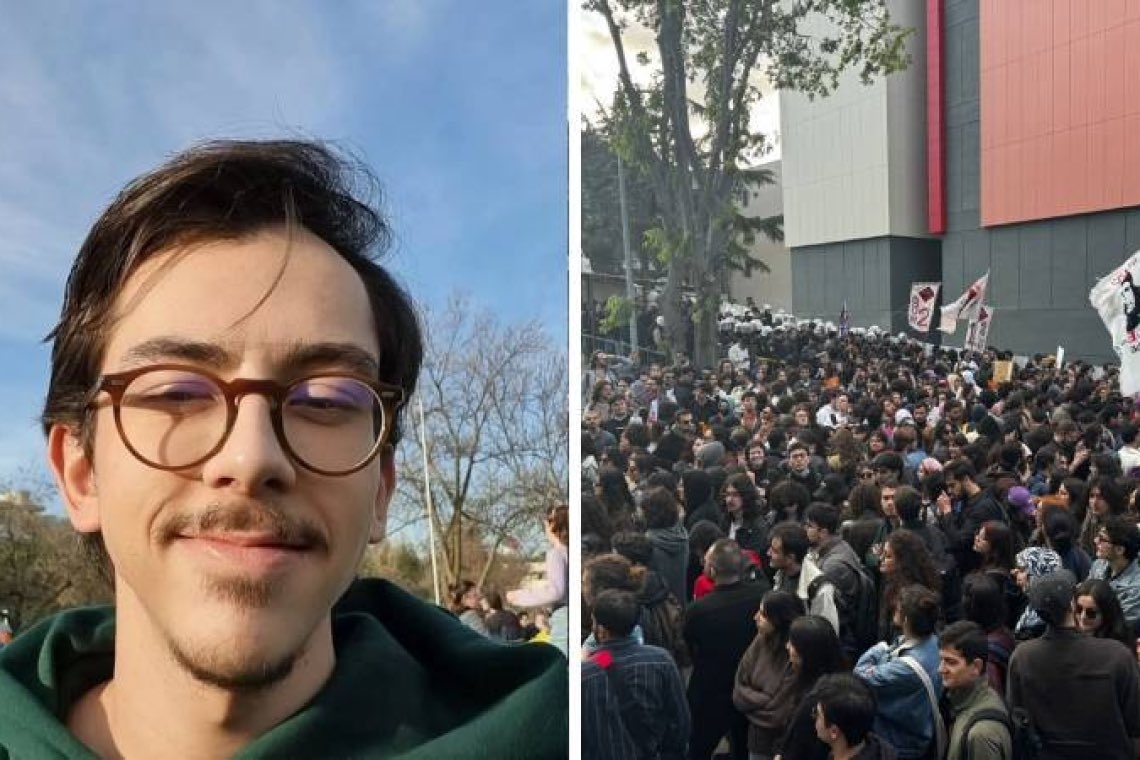
One police officer, identified as S.K. and assigned to the security branch, said officers were pushed back by the crowd during the protest at Boğaziçi University—one of Turkey’s top institutions, located in Istanbul—causing several officers to fall into a construction pit. She said they had retreated as female officers and later filed complaints against the defendants.
Another officer, M.O., said protesters had been warned to disperse but refused, adding that “as the crowd moved toward the police,” some officers fell into what he described as a pit “4 to 5 meters deep.” When asked by the judge whether safety precautions had been taken at the construction site, he said the area had been “cordoned off as usual.”
Defense lawyers challenged the officers’ accounts, questioning the depth of the pit and noting that if it were that deep, more serious injuries would likely have occurred. They also pointed out that while the incident lasted about three hours, only 35 minutes of footage had been submitted to the case file, arguing the investigation was incomplete.
Students rejected the police narrative, saying they were unable to leave a police cordon. Defendant Begüm Pekgüç told the court that although officers claimed an exit corridor had been opened, “we were inside the cordon, we wanted to leave but were not allowed,” adding that she was detained despite attempting to exit.
Another defendant, İdil Bayram, said they were unable to breathe while surrounded and pleaded with police to widen the cordon. “They threw our friends to the ground,” she said, adding she heard a superior officer say, “I’m not saying don’t beat them, but don’t throw them to the ground.” She also said police told them, “You will only leave here to go to court.”
Journalist Can Öztürk denied the accusation, saying he was at the scene purely to cover the protests. “I did not push or shove anyone; on the contrary, I was subjected to violence by police,” he said. His lawyer noted that Öztürk holds an official press card issued by Turkey’s presidency and called for his acquittal.
Other defendants described alleged mistreatment during detention. Merve Mina Pelit said police told her, while being taken for a medical examination, “Make sure there’s nothing visible on your face before the exam, we’ll deal with it afterward,” and claimed a doctor failed to document bruises. She also said she had to wear long sleeves during family visits in detention to hide injuries.
Sefa Sercan Gökoğlu said police refused to let them leave the cordon, telling them, “We will take you out ourselves,” and alleged that one detainee was beaten so severely near a police vehicle that his white shoes were “completely covered in blood.”
Defense lawyer Pınar Akbina Karaman argued that responsibility lay not with the students but with authorities who failed to ensure safety at the construction site and did not provide adequate training to officers. She also criticized the lack of compensation for injured officers and said both police and students were being pitted against each other.
The court accepted the participation of the police officers as complainants but rejected defense requests for an expert report, the inclusion of all video footage, and the expansion of the investigation.
The hearing was adjourned until July 3 at 9:30 a.m.