

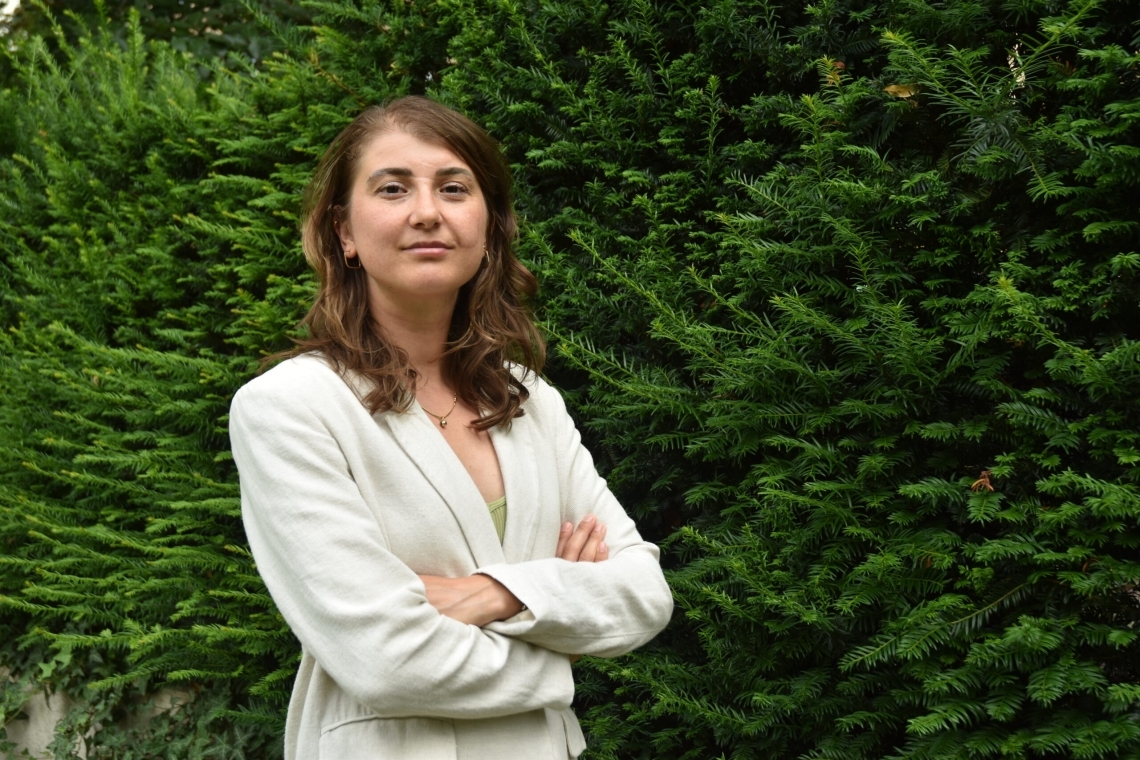
A court ruled that journalist Hazal Ocak must pay 10,000 Turkish lira in moral damages in a lawsuit filed by President Recep Tayyip Erdoğan’s son-in-law Berat Albayrak, despite her acquittal in a criminal trial over the same report.
The ruling came in the compensation case filed by Albayrak—Turkey’s former treasury and finance minister—against Ocak over a report titled “The son-in-law knows the job,” published in Cumhuriyet newspaper.
In the case heard at the Istanbul 33rd Civil Court of First Instance, the court decided on partial acceptance of the case and ruled that Ocak pay 10,000 TL in moral compensation. The court rejected the remaining portion of Albayrak’s 200,000 TL compensation claim.
According to the decision, the 10,000 TL compensation will be collected from Ocak together with legal interest accruing from Feb. 3, 2020.
At the hearing, the plaintiff’s lawyer argued that the expressions in the report constituted an attack on personal rights and requested acceptance of the case. The defendant side, on the other hand, requested rejection of the case, stating that the acquittal decision given about Ocak in the criminal court had become final.
The court ruled for compensation with the assessment that the acquittal decision in the criminal case is not binding for the civil court.
While the reasoning of the decision has not yet been announced, the path of appeal is open for the parties. The file is expected to be taken to the Istanbul Regional Court of Justice.
What had happened?
In the report titled “The son-in-law knows the job,” published in Cumhuriyet newspaper, it was alleged that then-Treasury and Finance Minister Berat Albayrak had purchased land along the route of the Kanal Istanbul project, a controversial government-backed canal project in Istanbul. Due to this report, a criminal case was filed against journalist Hazal Ocak on the charge of “insulting a public official.”
In the case heard at the Istanbul 2nd Criminal Court of First Instance, Ocak rejected the accusations, stating that the report was within the scope of journalistic activity and aimed to inform the public. The court ruled that the report remained within the limits of freedom of expression and criticism and decided on Ocak’s acquittal.